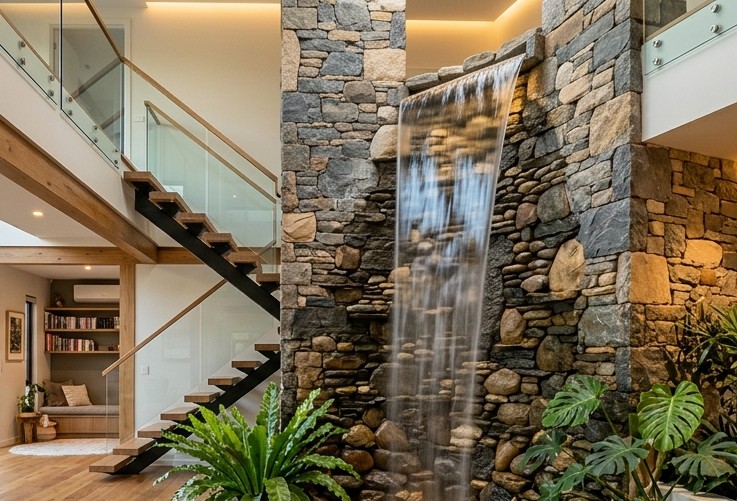
The idea behind biophilic design is simple: people tend to feel better in spaces that keep us connected with the living world. Water is one of the most immediate ways to create that connection. We notice its movement before we understand the room, and we hear it even when we are looking elsewhere.
But adding water does not automatically make a space restorative. An oversized jet can make conversation difficult. A mirror pool placed in a harsh sun can glare. Dense planting without service access can make routine cleaning frustrating. The successful design is the one where the sensory experience and the engineering support each other.
Start with the feeling, then engineer the water.
1. Write the experience brief first
Before choosing a nozzle or finish, describe the moment you want to create in one sentence. A villa courtyard might need “a quiet pause visible from the living room.” A hotel entrance might need “a confident arrival that still allows conversation.” A public plaza may need “movement and delight that can be seen from a distance.”
This sentence becomes a practical filter. It helps define whether the water should be reflective or energetic, whether the sound should be close and subtle or reach across a large space, and whether visitors watch the water or move through it.
Reflective water
Low movement, broad surfaces and dark finishes create depth and visual calm.
Sheet waterfalls
Continuous flow creates a soft sound layer and a clear architectural focal point.
Choreographed jets
Height, rhythm and light bring movement to plazas, resorts and arrival spaces.
2. Design the sound, not only the shape
Water sound is created by flow rate, fall height, impact surface and the acoustics of the surrounding room or courtyard. A thin sheet landing on water sounds different from droplets falling on stone. Hard walls amplify sound; planting and soft materials absorb some of it.
For lounges, offices and residences, begin with restrained flow and provide speed control where practical. The feature should soften distracting background noise without becoming the loudest object in the room. In a large outdoor arrival court, a stronger sound may be useful because traffic and wind already compete for attention.
A useful on-site test
Stand where people will sit, greet guests or work. If the proposed water sound would force them to raise their voice, lower the fall, soften the landing or reduce the flow before finalising the design.
3. Use water to guide movement
The best location is rarely the leftover corner. Water can mark an entrance, draw people toward a view, slow movement at a transition or give a long corridor a destination. Sightlines matter: consider the view while approaching, while seated and after dark.
Allow enough distance around splash zones, keep walkways clear and preserve maintenance access. Where children can reach the water, edge details, depth, electrical protection and non-slip surfaces need to be resolved as core design requirements.
4. Pair water and planting with restraint
Plants make a water feature feel established, but the combination needs planning. Choose species suited to the available light and humidity. Keep leaf drop away from narrow channels and suction points. Give roots their own contained planting volume so they do not interfere with waterproofing or pipework.
A few strong layers often work better than many decorative species: one structural plant, a softer middle layer and a low ground layer. Leave breathing room around the water edge so the composition remains legible and cleaning stays simple.
5. Plan daylight and night light together
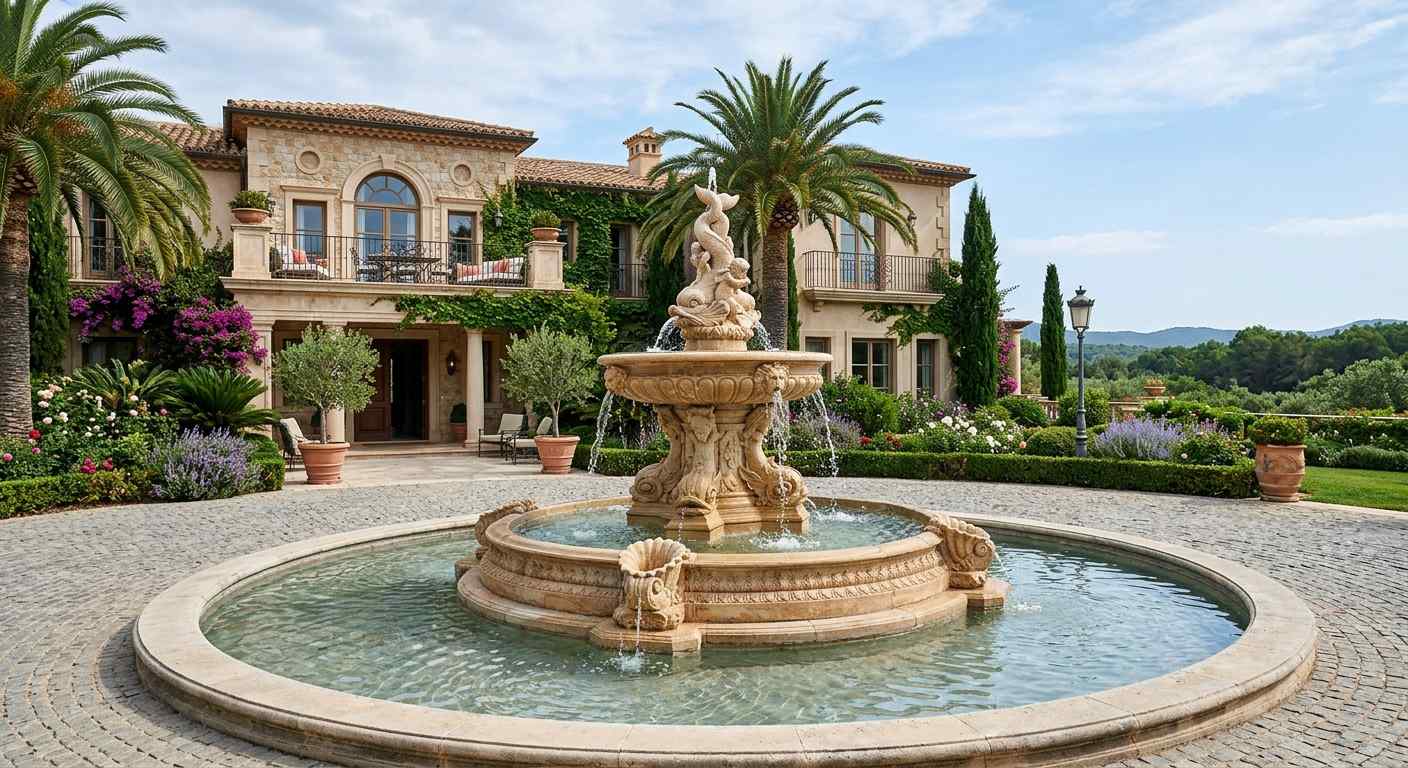
During the day, surface colour and texture determine how water catches the light. At night, the fixture position becomes part of the hydraulic design. Light aimed across moving water reveals texture; light from below gives jets volume; concealed grazing light can make a sheet waterfall appear to float.
Avoid exposing bright points directly to the viewer. Use underwater-rated fixtures, accessible junctions and separate controls for water and lighting. For hospitality spaces, a warmer static scene can feel more refined than continuously changing colour. RGB lighting is most effective when it supports a planned event or show.
6. Treat water quality as a design material
Clear, odour-free water is part of the visual experience. A recirculating system reduces regular water demand, but it still needs a correctly sized tank, filtration, make-up provision and an easy way to remove sediment. Evaporation varies with climate, exposed surface, wind and water movement, so the system should be planned for the actual site.
Make the service route obvious. Filters, pumps, valves and lighting drivers should be reachable without removing major finishes. A beautiful fountain that is difficult to maintain will not stay beautiful for long.
Maintenance access is part of the architecture.
7. Prototype the part people notice most
For a custom lip, unusual stone surface or very quiet interior, a small water test can answer questions that drawings cannot. It reveals whether the sheet breaks, where droplets travel, how a texture changes the sound and whether the selected light angle is effective.
For complex projects, coordinate the civil, hydraulic, electrical, structural and landscape work before construction begins. Sleeves, levels, drain points and equipment spaces are inexpensive to resolve on paper and costly to improvise after finishes are installed.
A concise planning checklist
What makes the result feel natural?
Natural does not have to mean rustic. A precise glass waterfall in a contemporary lobby can feel biophilic when the movement is gentle, the sound is comfortable and the materials respond beautifully to light. The goal is not to imitate a forest literally; it is to recover some of the qualities that make natural settings restorative — variation, depth, sensory rhythm and a sense of life.
Begin with the human moment. Let engineering make that moment dependable. When those two ideas remain connected, water stops being an accessory and becomes part of how the place is remembered.
Frequently asked questions
Can a biophilic water feature work indoors?
Yes. Indoor installations work especially well when splash, humidity, sound, waterproofing and service access are designed for the room from the beginning.
Which type of fountain is quietest?
Shallow flow, short falls and water landing on water are generally quieter than high jets or droplets landing on hard surfaces. The surrounding room also has a strong effect.
Does a fountain need fresh water continuously?
Most modern fountains recirculate water. They still require filtration and periodic make-up water to replace evaporation and losses during cleaning.
When should fountain engineering begin?
Ideally during concept design, before structural levels and service routes are fixed. Early coordination keeps pumps, drains, tanks and cables discreet and maintainable.